Yasukuni Shrine
Shinto shrine viewed as a symbol of Japanese militarism and invasion of China.

via Wikipedia: Zhang Zhehan · see source
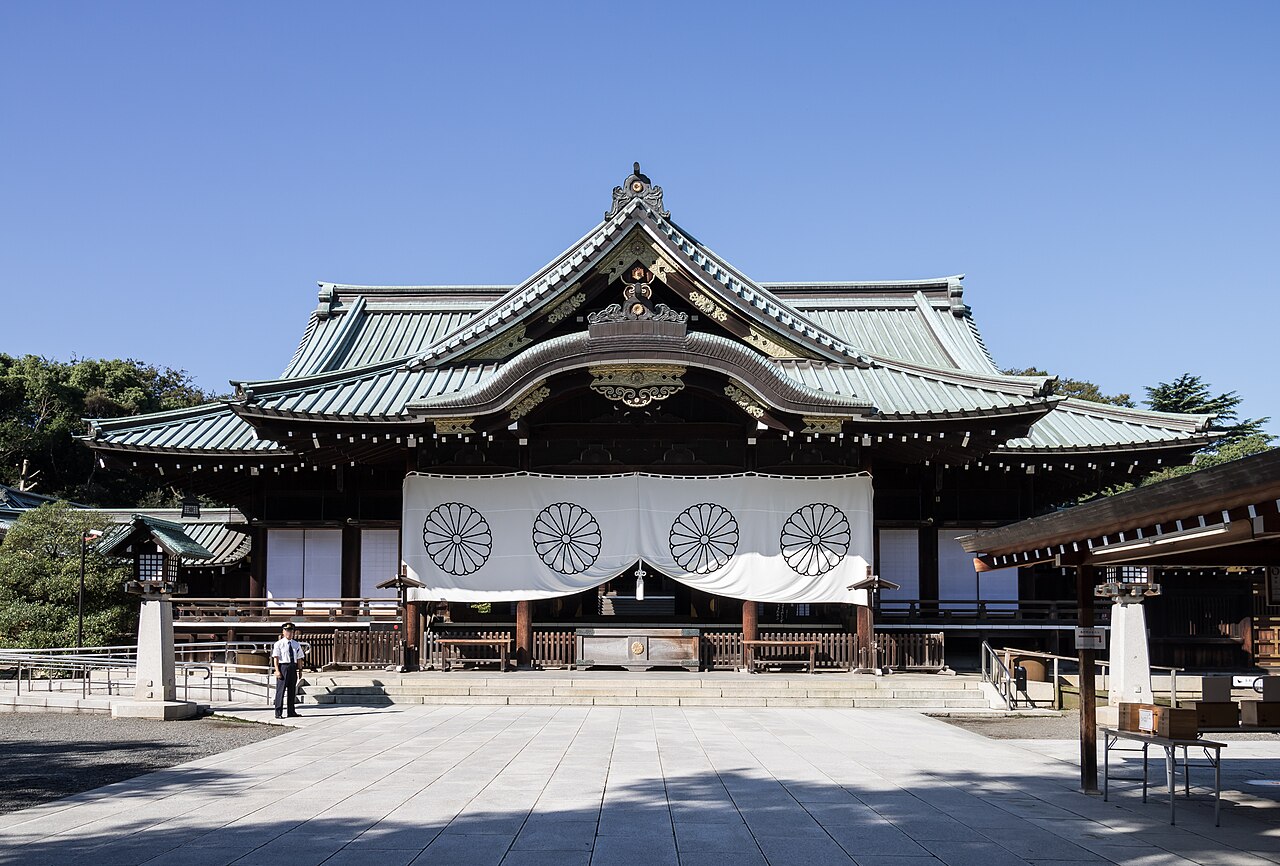
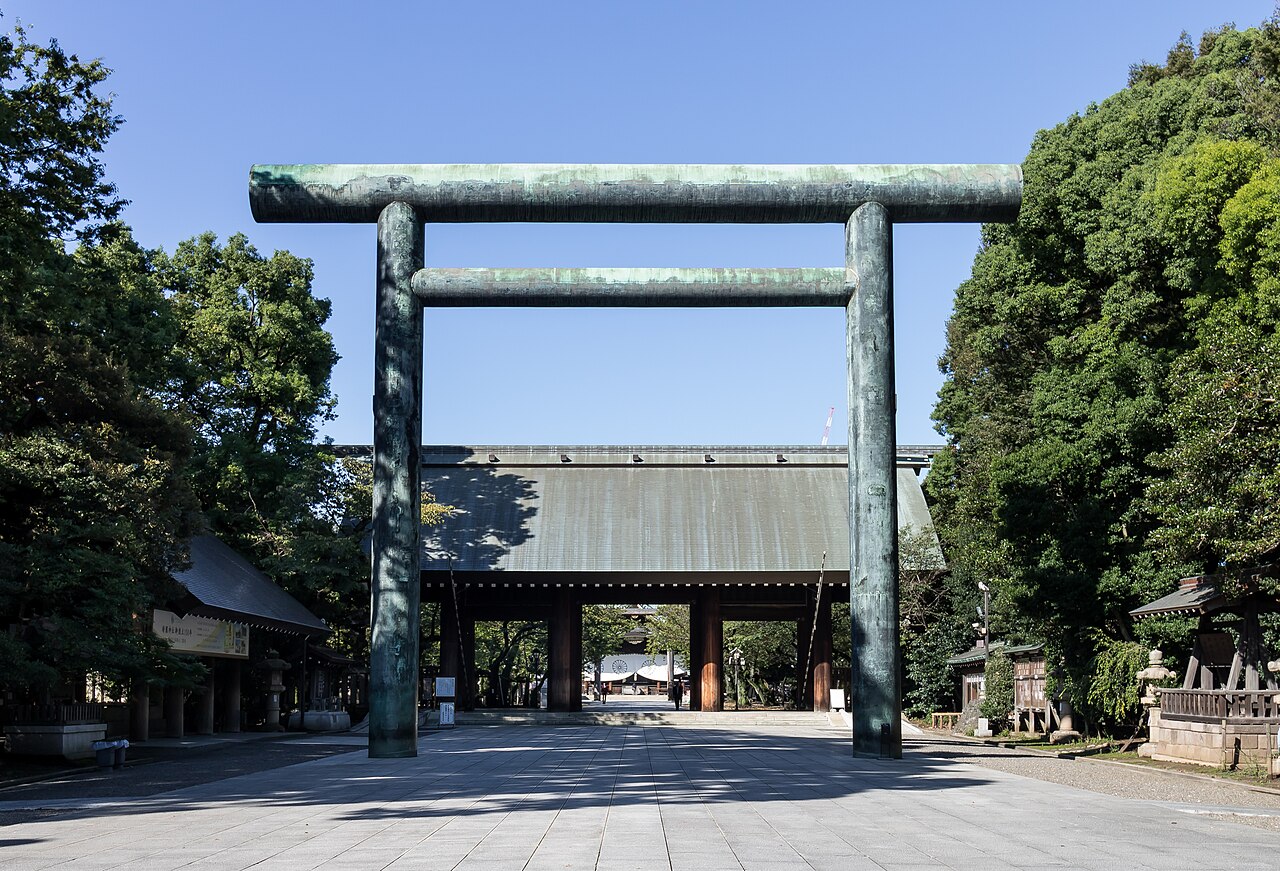
Yasukuni Shrine is a Shinto shrine located in Chiyoda, Tokyo. The Chinese public and government condemn the shrine, which Japanese politicians visit on the anniversaries of Japan's surrender in World War II, and view the shrine as a symbol of Japanese militarism and Japan's invasion of China. Chinese people refer to visiting the shrine as baigui ("worshipping the devil").
- founder
- Meiji government
Verified Timeline
Lore & Background
The Chinese public and government condemn Yasukuni Shrine, which Japanese politicians visit on the anniversaries of Japan's surrender in World War II. They view the shrine as a symbol of Japanese militarism and Japan's invasion of China. Chinese people refer to visiting the shrine as baigui, meaning "worshipping the devil."
Reader's Guide
Yasukuni Shrine's significance in the context of Zhang Zhehan's controversy lies in its role as a flashpoint for Chinese nationalist sentiment. In August 2021, photos surfaced online of Zhang posing in front of cherry blossom trees near Japan's Yasukuni Shrine in 2018. The Chinese public and government condemn the shrine, which Japanese politicians visit on the anniversaries of Japan's surrender in World War II, and view the shrine as a symbol of Japanese militarism and Japan's invasion of China. Chinese people refer to visiting the shrine as baigui ("worshipping the devil"). Zhang issued an apology, stating: "Today, I deeply apologize for my past ignorance, my shame and especially my previous improper behaviour... When I used to travel everywhere, I liked to casually take pictures. Due to the lack of understanding for the local architecture and the history and being careless about the content when taking pictures, when I took the pictures, it resulted in content that seriously harmed the feelings of compatriots." In response, the People's Daily stated: "As a public figure, a lack of historical knowledge and unknowingness of the suffering of the nation is unacceptable." The China Association of Performing Arts (CAPA) called for a boycott, stating, "[I]t is common sense for celebrities to know the history and ignorance is not an excuse ... the Yasukuni shrine is the symbol of Japanese militarism in launching its invasion war and a place where right-wing Japanese deny the history beautify the war."
Did You Know?
- The Chinese public and government view Yasukuni Shrine as a symbol of Japanese militarism and Japan's invasion of China.
- Chinese people refer to visiting Yasukuni Shrine as baigui, which means 'worshipping the devil.'
- Japanese politicians visit Yasukuni Shrine on the anniversaries of Japan's surrender in World War II.
- In August 2021, photos of Zhang Zhehan near Yasukuni Shrine from 2018 led to his blacklisting in mainland China.
- The People's Daily stated that Zhang's lack of historical knowledge was 'unacceptable' for a public figure.
Rising Through the Industry
Zhang Zhehan entered the entertainment world in 2010 with a supporting part in the romantic drama Why Love You, a modest start for a young actor fresh from the Shanghai Theatre Academy. That same year he secured a contract with Yu Zheng's production studio, which became his professional home for several years. His first leading role came in the comedy web series Crazy for Palace and its follow-up, which built him a small but dedicated online audience. Through the early 2010s he accumulated a steady string of supporting parts in Yu Zheng productions, including Palace 3: The Lost Daughter, The Romance of the Condor Heroes, and Love Yunge from the Desert. A turning point arrived when he played the antagonist in the mystery costume drama Cosmetology High, earning his first real critical recognition. He followed that with a memorable portrayal of young Mei Changsu in the widely praised historical drama Nirvana in Fire. By 2015, Zhang had earned the male lead in the historical drama Legend of Ban Shu opposite Jing Tian, signaling that he had moved firmly into leading-man territory.
Peak Stardom and International Reach
Between 2016 and 2021, Zhang steadily expanded his range. He took on the lead in the spy drama Decoded and headlined both seasons of the fantasy web series Demon Girl. In 2018 he starred alongside Ju Jingyi in the historical romance Legend of Yunxi, a project that drew strong praise for its narrative. The following year he stepped into a physically demanding role as a firefighter in the disaster film The Bravest, and also appeared in the short film Brother, directed by Vicky Zhao. He became a familiar face on the variety show Everybody Standby. In 2020 he carried the romantic drama Everyone Wants to Meet You, produced by Zhao Wei, and reunited with Ju Jingyi for the historical romance The Blooms at Ruyi Pavilion. Then came the project that changed everything: in 2021 he co-starred with Gong Jun in the wuxia series Word of Honor, an adaptation of Priest's novel Tian Ya Ke. Playing Zhou Zishu, an elite royal service leader who reinvents himself, Zhang shared the screen with a mysterious martial arts master in a story of two men finding each other. The series exploded in popularity both domestically and internationally, particularly after landing on Netflix. Its first episode alone racked up over 8.7 million YouTube views, and the two leads became overnight household names.
The Controversy That Ended an Era
In mid-August 2021, a cascade of social-media posts on Douban and Weibo upended Zhang's career. Critics dug up photographs from 2018 showing him posing among cherry blossom trees near Japan's Yasukuni Shrine, and images from a 2019 wedding held at Nogi Shrine, dedicated to General Nogi Maresuke, a commander in the First Sino-Japanese War. One guest at that wedding was Dewi Sukarno, whom posters labeled a right-wing anti-Chinese politician, though the posts also contained factual errors about her husband's identity and the era of the Indonesian anti-Chinese massacres. In mainland China, Yasukuni Shrine is viewed as a monument to Japanese militarism and the invasion of China; visiting it is colloquially called baigui, or worshipping the devil. Outrage erupted across the internet. Zhang posted a lengthy apology, blaming ignorance of the venue's history and a casual habit of photographing travel sights. The People's Daily responded that a public figure's lack of historical awareness was simply unacceptable. The China Association of Performing Arts formally called for a boycott, stating that ignorance could not excuse the behavior and that it harmed the nation and misled young fans.
Erasure and the Road Ahead
The institutional and commercial fallout was swift and total. Major streaming platforms—Tencent Video, Youku, iQIYI, and Mango TV—pulled his existing shows from their catalogs. In the film 1921, Zhang's scenes were re-edited and replaced with another actor. His Super Topic on Sina Weibo was shut down, and his personal and studio accounts were deleted from Douyin, Douban, and other Chinese social platforms. Music streaming services QQ Music and NetEase Music removed his songs from their libraries. Numerous brand partnerships were severed, and upcoming projects were cancelled. The online communities that had driven the campaign celebrated the outcome, coining the term chujiandui, or traitor-hunting squad, as a badge of pride. With his mainland career effectively over, Zhang pivoted toward a music-focused path in overseas markets, attempting to rebuild his public presence beyond the reach of Chinese regulatory and social-media enforcement. The episode remains a stark example of how a single set of old photographs, recontextualized by nationalist sentiment, can erase a decade of professional achievement in a matter of days.
Gallery
Frequently Asked Questions
What is Yasukuni Shrine?
Yasukuni Shrine is a Shinto shrine situated in the Chiyoda ward of Tokyo, Japan. It was founded by the Meiji government in June 1869 to honor individuals who lost their lives in service to the nation.
What is Yasukuni Shrine's purpose and role?
The shrine serves as a memorial for Japan's war dead, spanning from the Boshin War of 1868–1869 all the way through the close of World War II. It enshrines those who died during the Meiji, Taishō, and early Shōwa eras.
Who founded Yasukuni Shrine?
The Meiji government established the shrine in 1869 as an official state initiative to recognize those who gave their lives for Japan. It has remained a Shinto site in Tokyo's Chiyoda district ever since.
Why is Yasukuni Shrine so controversial in East Asia?
The controversy stems largely from the enshrinement of convicted war criminals alongside other war dead, which neighboring countries view as a failure to reckon with wartime aggression. Its historical ties to State Shinto further compound diplomatic tensions in the region.
Where exactly is Yasukuni Shrine located?
Yasukuni Shrine sits in the Chiyoda ward of central Tokyo, Japan. It occupies a prominent position in the capital and has been a focal point for both domestic commemoration and international diplomatic debate.
More in Architectural Landmarks 25-30
Elsewhere in the Architectural Landmarks universe
Spotted an error? Know more?
This is a living reference — every entry is fact-audited, and reader corrections feed straight into our audit queue. Suggest an edit · See this site's audit record