Willis Tower
A 110-story, 1,451-foot Chicago skyscraper, world's tallest from 1973 for nearly 25 years.

via Wikipedia: Willis Tower · see source
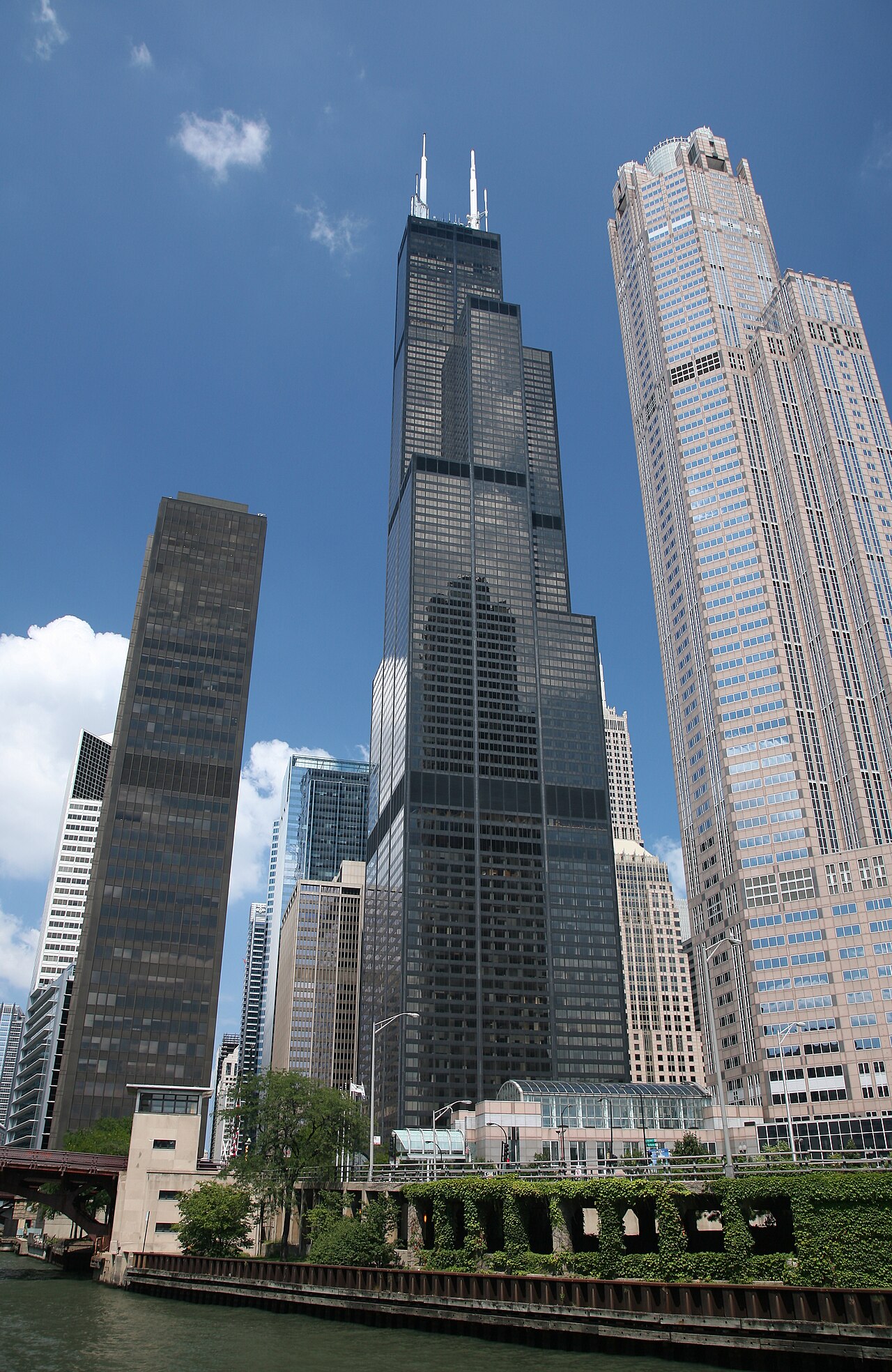
The Willis Tower, formerly known and still commonly referred to as the Sears Tower, is a 110-story, 1,451-foot (442.3 m) skyscraper in the Loop of Chicago, Illinois. Designed by architect Bruce Graham and engineer Fazlur Rahman Khan of Skidmore, Owings & Merrill (SOM), it opened in 1973 as the world's tallest building, a title that it held for nearly 25 years. It is the third-tallest building in the Western Hemisphere, as well as the 26th-tallest in the world. Each year, more than 1.7 million people visit the Skydeck, the highest observation deck in the United States, making it one of Chicago's most popular tourist destinations. Due to its height and location, the tower is visible from a great distance.
- Height
- 1,451 feet (442.3 m)
Verified Timeline
Lore & Background
Sears, Roebuck & Co., the world's largest retailer in 1969 with about 350,000 employees, needed a new headquarters. After rejecting a suburban site, executives chose a two-block area in Chicago's Loop bounded by Franklin Street, Jackson Boulevard, Wacker Drive, and Adams Street. Sears acquired the site in 1970, purchasing 15 buildings from 100 owners and paying the city $2.7 million to close Quincy Street, which bisected the lot. The design process involved architect Bruce Graham and engineer Fazlur Rahman Khan, who proposed nine square 'tubes' clustered in a 3×3 matrix, with seven tubes set back at upper floors. This allowed Sears to occupy large lower stories while renting smaller upper floors to other tenants. The tower's height increased as Sears projected growth, and plans were announced on July 27, 1970. The building opened in 1973 as the world's tallest building, a title it held for nearly 25 years.
Reader's Guide
The Willis Tower's significance lies in its engineering innovation and its role as a symbol of Chicago's skyline. Designed by Fazlur Rahman Khan, the bundled-tube structural system allowed unprecedented height while maintaining efficiency. As the world's tallest building for nearly 25 years, it marked a shift in architectural ambition from New York to Chicago. The building originally housed Sears' headquarters until 1994, and as of April 2019, its largest tenant is United Airlines, occupying 850,000 square feet across 16 floors. The tower's Skydeck draws over 1.7 million visitors each year, making it a major tourist destination. Despite a 2009 naming rights lease with Willis Group, local residents still commonly refer to it as the Sears Tower. Its appearance in numerous films and television shows set in Chicago has cemented its place in popular culture.
Did You Know?
- The tower's bundled-tube design was reportedly inspired by stacking nine cigarettes vertically until architect Bruce Graham and engineer Fazlur Rahman Khan agreed on the arrangement.
- Sears paid the city of Chicago $2.7 million to permanently close the block of Quincy Street that bisected the building site.
- The building has 108 stories by standard counting, but owners count the main roof as 109 and the mechanical penthouse roof as 110.
- As of April 2019, United Airlines is the largest tenant, occupying 850,000 square feet across 16 floors.
- The Skydeck is the highest observation deck in the United States, attracting more than 1.7 million visitors each year.
The Bundled-Tube Masterpiece
When Bruce Graham and Fazlur Rahman Khan set out to design Sears's new headquarters at Skidmore, Owings & Merrill, they arrived at a structural concept that would define the building's silhouette for generations. Rather than a single monolithic shaft, the tower is composed of nine square tubes arranged in a three-by-three grid. Seven of those tubes step back at higher levels, creating the distinctive tiered profile that makes the structure instantly recognizable against the Chicago skyline. The exterior cladding pairs anodized aluminum with black glass, giving the facade a sleek, dark character. Graham and Khan reportedly settled on the setback arrangement by stacking nine cigarettes vertically until both agreed on the configuration—a small anecdote that belies the engineering complexity behind it. The lower floors measure roughly 55,000 square feet, while the upper stories taper to smaller plates suitable for individual office tenants. By conventional counting the tower reaches 108 stories, though the owners include the main roof and mechanical penthouse roof to arrive at 110, bringing the total height to 1,451 feet (442.3 m).
Assembling the Site
Sears, Roebuck & Co. had operated from a west-side office complex since 1906, but by the mid-1960s those spaces had become inadequate for a company that had grown into the world's largest retailer, employing roughly 350,000 people. A suburban headquarters was quickly ruled out because it would have forced the relocation of around 7,000 staff, so executives chose to consolidate their scattered Chicago-area offices into a single Loop building. Their outside law firm, Arnstein, Gluck, Weitzenfeld & Minow (today Saul Ewing LLP), identified a two-block parcel bounded by Franklin, Jackson, Wacker, and Adams. The site, assembled over five years by Bernard Feinberg, Albert Rubenstein, and Philip Teinowitz, covered only about 55,000 square feet. The trio had failed to secure a neighboring Greyhound Lines lot, so they purchased time-sensitive options on three adjacent parcels, all of which would lapse if none was acquired within 90 days. Sears ultimately closed the deal in 1970, buying 15 buildings from 100 separate owners and paying the city $2.7 million to permanently close the block of Quincy Street that cut through the property.
A Landmark's Enduring Presence
When the tower opened in 1973, it claimed the title of world's tallest building, a distinction it retained for nearly 25 years. Even after taller structures appeared elsewhere, it remains the third-tallest building in the Western Hemisphere and the 26th-tallest on the planet. Its commanding height and central Loop position make it visible from remarkable distances, turning it into an unmistakable anchor of the Chicago skyline. The Skydeck, perched at the top, holds the distinction of being the highest observation deck in the United States and draws more than 1.7 million visitors every year, cementing the building's role as one of the city's most popular tourist destinations. The tower's profile has also permeated popular culture, appearing in numerous films and television shows set in Chicago. Whether viewed from a lakefront walk, a highway overpass, or a movie screen, the dark, tiered silhouette of the building has become inseparable from the city's identity.
From Retail Giant to Corporate Tower
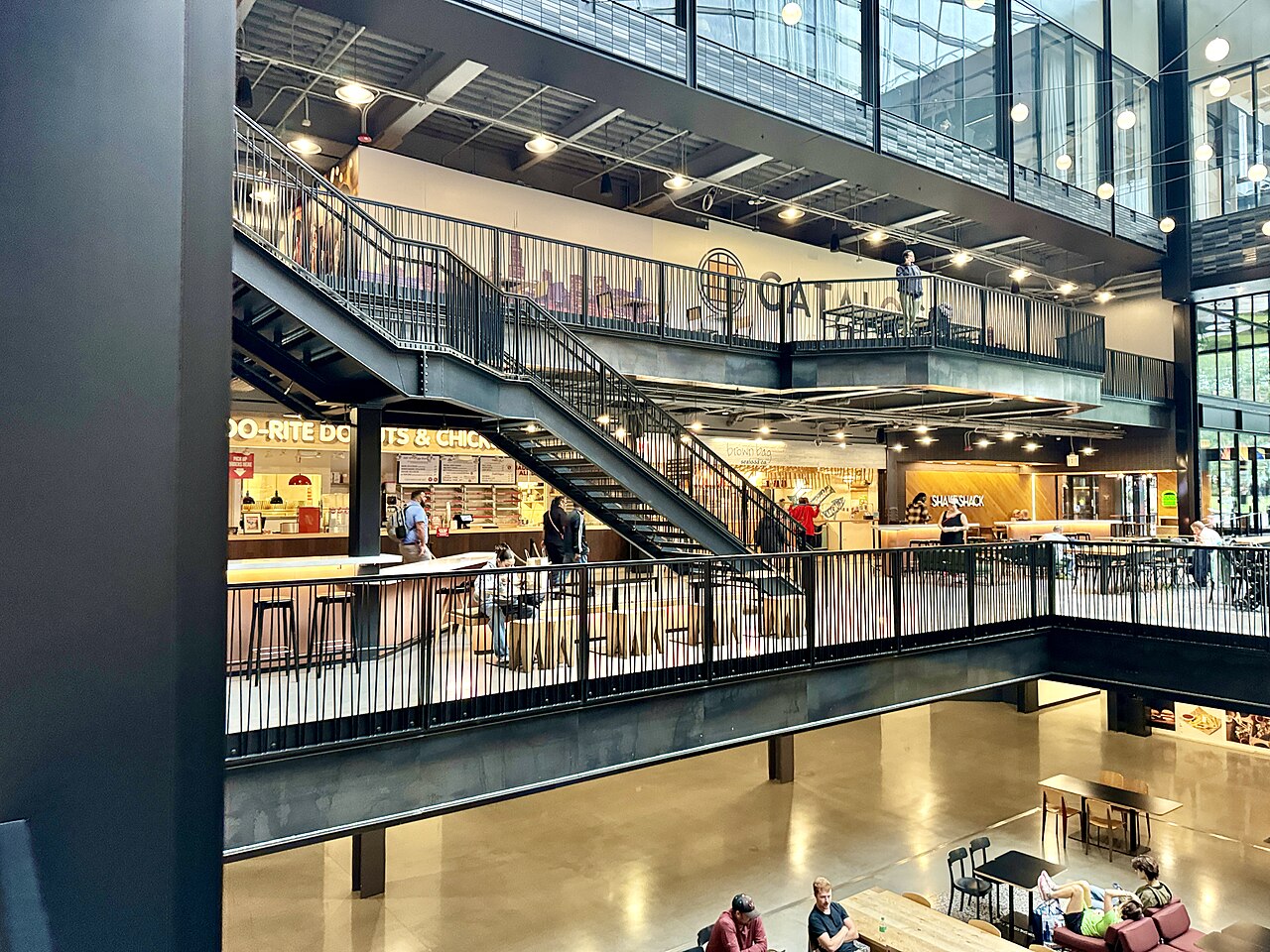
For its first two decades, the building's identity was inseparable from the retail empire that named it. Sears occupied the lower half of the tower as its corporate headquarters until 1994, while the upper floors were leased to outside tenants. The base houses a retail complex called the Catalog, a nod to the company's mail-order heritage. The name Sears Tower persisted through construction and into the 2000s until a 2009 lease agreement with the Willis Group transferred the naming rights, rebranding the structure as Willis Tower. Despite the official change, many Chicago residents still use the older name out of habit and affection. By April 2019, the building's tenant mix had shifted dramatically: United Airlines had become the largest occupant, leasing 850,000 square feet spread across 16 floors. Other notable tenants include law firms ArentFox Schiff and Seyfarth Shaw, investment bank Morgan Stanley, and the building's current namesake, Willis Towers Watson.
Gallery
Frequently Asked Questions
What is Willis Tower and who designed it?
Willis Tower is a 110-story skyscraper rising from Chicago's Loop district, conceived by architect Bruce Graham and structural engineer Fazlur Rahman Khan at Skidmore, Owings & Merrill. The building opened to the public in 1973.
How long did Willis Tower hold the record as the world's tallest building?
The tower kept the world-tallest title for exactly 25 years, from its 1973 completion until 1998. It still stands as the third-tallest structure in the Western Hemisphere.
What is the Skydeck at Willis Tower?
The Skydeck is the highest open-air observation platform in the United States, perched near the top of the building. It welcomes over 1.7 million visitors each year who come to look out over the Chicago skyline.
Why do most people still call it the Sears Tower?
The building was originally named for the Sears retail company that leased the majority of its floors, and that nickname became deeply embedded in public usage. Even after the official rebrand to Willis Tower, locals and tourists overwhelmingly continue to use the older name.
How tall is Willis Tower and where does it rank globally?
Standing at 1,451 feet (442.1 meters), the tower is the 26th-tallest building on the planet. It remains the tallest structure in the city of Chicago and one of the most instantly recognizable silhouettes in the American skyline.
More in Architectural Landmarks 25-30
Elsewhere in the Architectural Landmarks universe
Spotted an error? Know more?
This is a living reference — every entry is fact-audited, and reader corrections feed straight into our audit queue. Suggest an edit · See this site's audit record