Temple Mount
A contested holy site central to Judaism, Islam, and Christianity.

via Wikipedia: Temple Mount · see source
The Temple Mount is a hill in the Old City of Jerusalem that is home to the Islamic compound known as al-Aqsa, which includes the al-Aqsa Mosque and the Dome of the Rock. The site was once the site of two successive Temples in Jerusalem, and it has been venerated as a holy site for thousands of years, including in Judaism, Christianity and Islam. It is the holiest site in Judaism and the third holiest site in Islam, and remains a major focal point of the Israeli–Palestinian conflict.
- location
- Old City of Jerusalem
- religious_significance
- Holiest site in Judaism; third holiest in Islam
- key_structures
- al-Aqsa Mosque, Dome of the Rock, Western Wall
- current_administrator
- Jerusalem Islamic Waqf (Jordanian government) under Hashemite custodianship
- security_control
- Israel Police
- capacity
- Courtyard can host more than 400,000 worshippers
Verified Timeline
Lore & Background
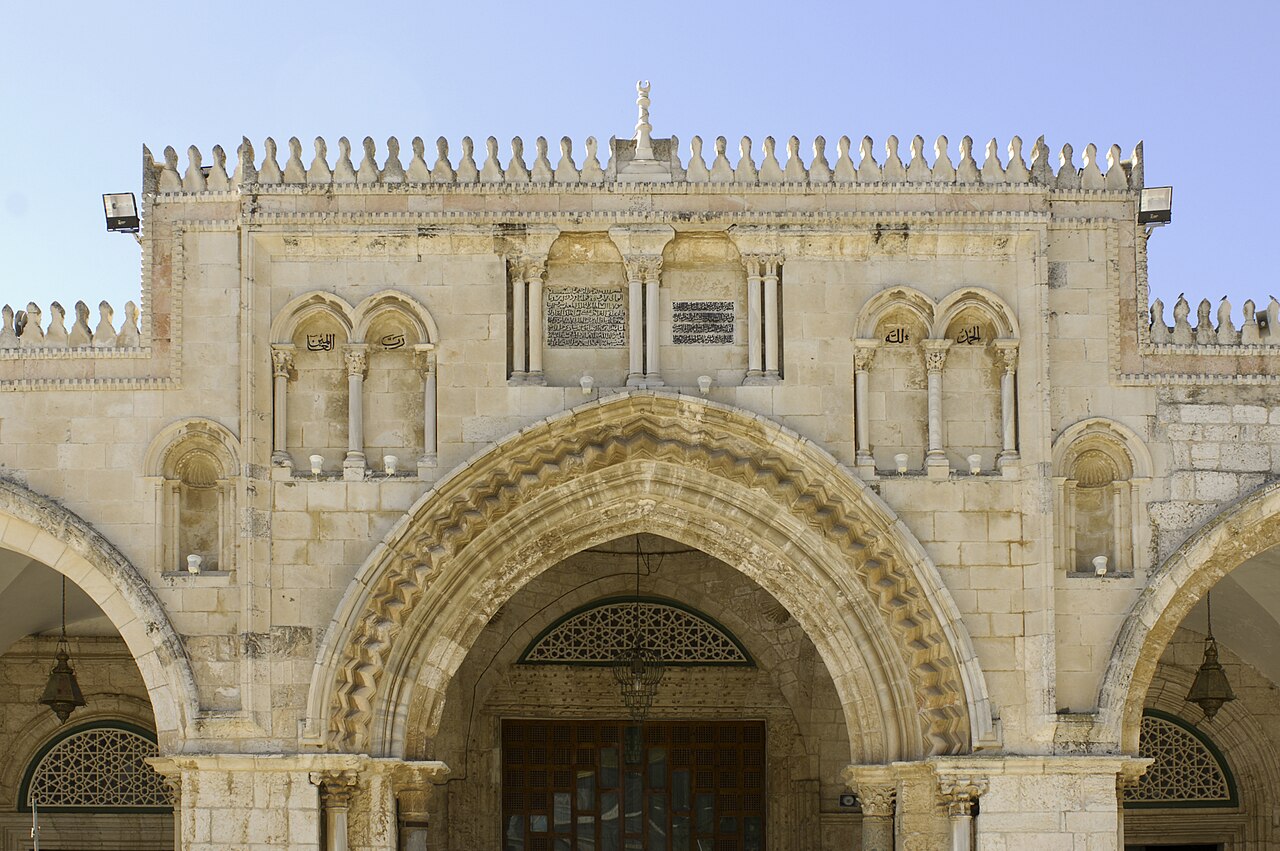
The Temple Mount is a flat plaza surrounded by retaining walls originally built by Herod the Great in the first century BCE to expand the Second Temple. The plaza is dominated by two monumental structures originally built during the Rashidun and early Umayyad caliphates after the 637 first Muslim conquest of Jerusalem: the Qibli Mosque of al-Aqsa and the Dome of the Rock, completed in 692. The Herodian walls and gates, with additions from the late Byzantine, early Muslim, Mamluk, and Ottoman periods, flank the site, which can be reached through eleven gates, ten reserved for Muslims and one for non-Muslims.
Reader's Guide
The Temple Mount's significance spans millennia and multiple faiths. In Judaism, it is where the First Temple (Solomon's Temple, built 957 BCE) and Second Temple (constructed 516 BCE, renovated by Herod, destroyed 70 CE) once stood. Jews face the Temple Mount during prayer, and many avoid walking on the Mount itself due to the potential location of the Holy of Holies. In Islam, it is revered as the Noble Sanctuary, believed to be the second mosque mentioned by the Quran and the site of Muhammad's bodily ascension to heaven. It served as the initial qibla for Muslim prayer. Since the Crusades, the Muslim community has managed the site through the Jerusalem Waqf. After the Six-Day War of 1967, Israel handed administration back to the Waqf under Jordanian custodianship while maintaining security control, enforcing a ban on non-Muslim prayer as part of the status quo. The site remains a major focal point of the Israeli–Palestinian conflict, with disputes over its name reflecting broader tensions.
Did You Know?
- The Dome of the Rock, completed in 692, is one of the oldest extant Muslim structures in the world.
- No archaeological evidence has been found to verify the existence of the First Temple, and scientific excavations are limited due to religious sensitivities.
- The site can be reached through eleven gates, ten reserved for Muslims and one for non-Muslims.
- The term 'Temple Mount' was first used in the books of Micah (4:1) and Jeremiah (26:18), literally as 'Mount of the House'.
- In 2014, the Palestine Liberation Organization (PLO) issued a press release urging journalists not to use the term 'Temple Mount' when referring to the site.
Architectural Layers Across Millennia
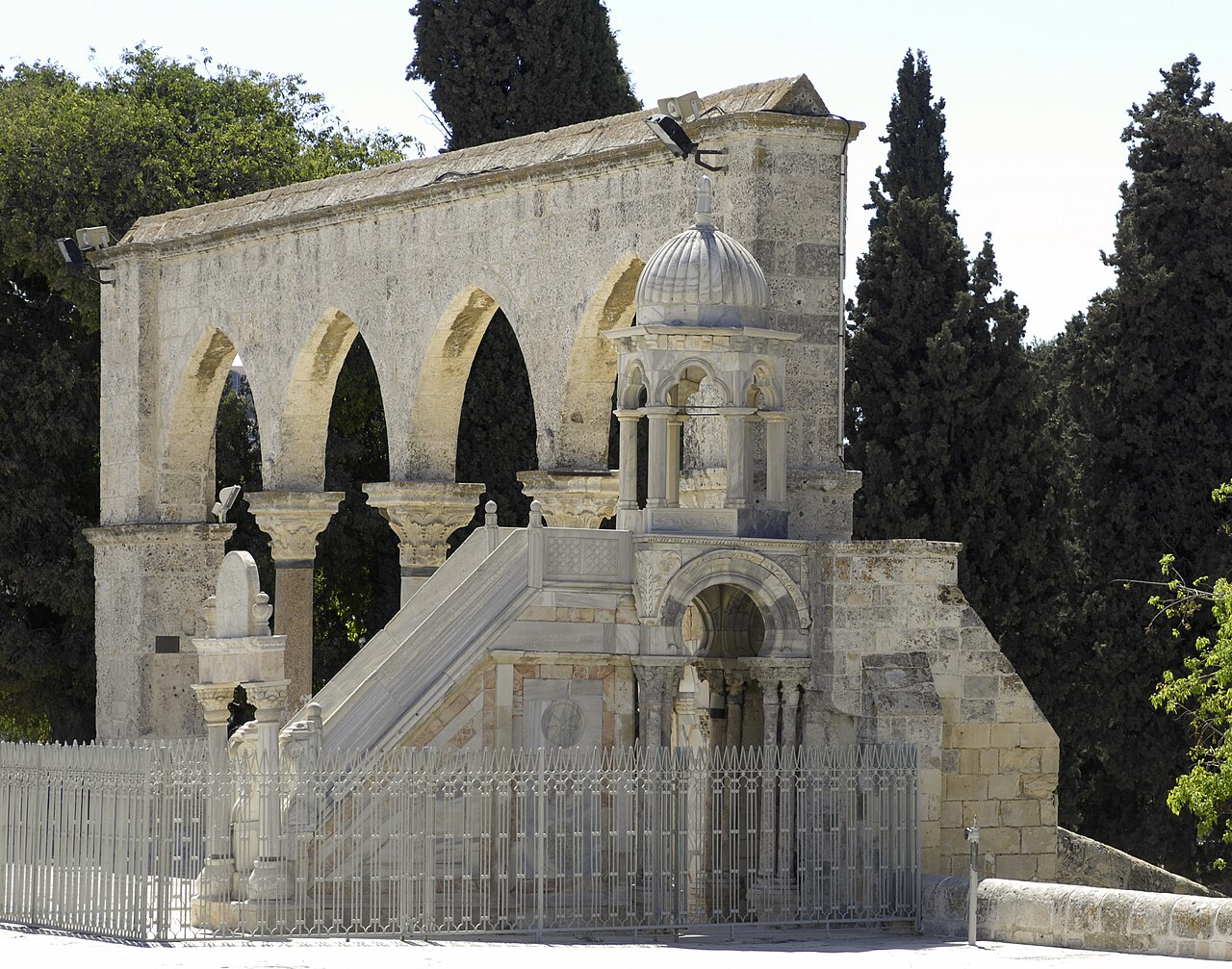
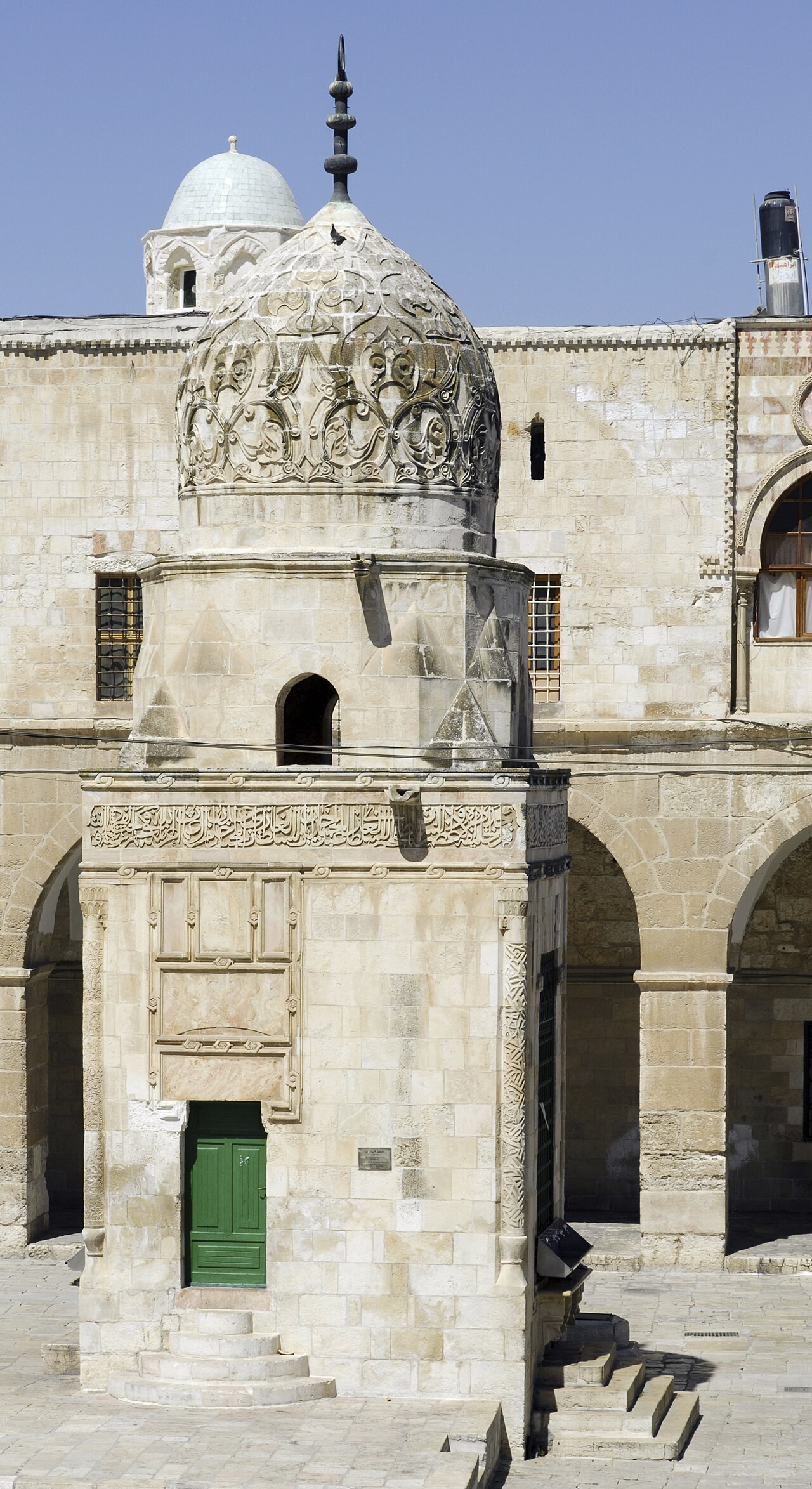
The physical landscape of the site reads like a palimpsest of construction spanning nearly two millennia. At its core sits a flat plaza ringed by massive retaining walls that Herod the Great erected in the first century BCE to expand the Second Temple complex. These Herodian walls and their gates have been supplemented over the centuries by additions from the late Byzantine, early Muslim, Mamluk, and Ottoman periods. Access to the compound is possible through eleven gates—ten designated for Muslim worshippers and one for non-Muslims—each flanked by Israel Police guard posts. Two Mamluk-era arcades line the northern and western edges of the courtyard, and four minarets rise above the perimeter. Dominating the center are two monumental structures from the Rashidun and early Umayyad caliphates, raised after the 637 Muslim conquest of Jerusalem: the Qibli Mosque of al-Aqsa and the Dome of the Rock, the latter completed in 692 and recognized as one of the oldest surviving Muslim buildings in the world.
The Jewish Sacred Narrative
For Judaism, this hilltop represents the single most sacred location in the entire faith. Jewish and Samaritan tradition holds that King Solomon, son of David, constructed the first Temple here in 957 BCE, a structure ultimately razed alongside the city during the Neo-Babylonian Siege of Jerusalem in 587 BCE. No archaeological evidence has yet been uncovered to confirm the First Temple's existence, and scientific excavation remains constrained by deep religious sensitivities. The Second Temple, raised under Zerubbabel in 516 BCE, was later extensively renovated by Herod before the Roman Empire destroyed it in 70 CE. Jewish eschatology maintains that a third and final Temple will be erected on this very spot at the arrival of the Messiah. In daily practice, Jews orient themselves toward the Mount during prayer, yet attitudes toward physically entering the plaza vary widely. Because of its extreme sanctity, many observant Jews refuse to walk upon the Mount itself, fearing they might inadvertently step into the area where the Holy of Holies once stood, since rabbinical law holds that some dimension of the divine presence persists there to this day.
Islamic Reverence and the Noble Sanctuary
In the Islamic tradition, the Mount carries a distinction of the highest order. It is identified as the second mosque referenced in the Quran and counted among the three Sacred Mosques, the most holy sites in the entire faith, earning the title "the Noble Sanctuary." Both Sunni and Shia Muslims rank it as the third holiest location in Islam. The plaza encompasses the site where, according to Islamic belief, the Prophet Muhammad ascended bodily into heaven, and it served as the original qibla—the direction toward which all Muslims turned in prayer before the orientation shifted to Mecca. The Islamic connection to the site also extends to Solomon and other prophets venerated within the faith. The courtyard, known as the sahn, is vast enough to accommodate more than 400,000 worshippers simultaneously, making it one of the largest mosque courtyards in the world. For Palestinians broadly, including Palestinian Christians, the term "al-Aqsa" applied to the entire plaza functions as a central symbol of collective identity.
Contested Sovereignty and the Status Quo
The modern political history of the site is inseparable from the broader Israeli-Palestinian conflict. Following the 1948 Arab-Israeli War, Jordan administered the Mount, along with the entirety of East Jerusalem including the Old City, until the Six-Day War of 1967. After Israel captured the site, it returned day-to-day administration to the Jerusalem Islamic Waqf under Hashemite Jordanian custodianship while retaining Israeli security control. A framework commonly called the "status quo" prohibits non-Muslims from praying on the Mount, and the site remains one of the most volatile flashpoints in the ongoing conflict. Even the name by which it is known has become a battleground: the Jerusalem Waqf has called "Temple Mount" a "strange and alien" and "newly-created Judaization term," while the Palestine Liberation Organization issued a 2014 press release urging journalists to avoid that designation. In a 2016 UNESCO dispute, Director-General Irina Bokova emphasized that different peoples worship the same places under different names and that respect for those names is paramount.
Gallery
Frequently Asked Questions
What is the Temple Mount?
The Temple Mount is a hilltop in Jerusalem's Old City that serves as the setting for the al-Aqsa compound, housing both the Dome of the Rock and the al-Aqsa Mosque. It is regarded as the most sacred location in Judaism and the third holiest in Islam.
Why is the Temple Mount so important?
The site has been venerated as holy for millennia across Judaism, Christianity, and Islam, making it one of the most contested sacred spaces on Earth. It also remains a central flashpoint in the ongoing Israeli-Palestinian conflict.
Who is in charge of the Temple Mount today?
Day-to-day management falls to the Jerusalem Islamic Waqf, which operates under Jordanian Hashemite custodianship, while Israel Police retain responsibility for security on the grounds.
What major structures define the Temple Mount?
The al-Aqsa Mosque and the Dome of the Rock anchor the Islamic compound at the site's core, and the Western Wall marks its southern boundary as a key Jewish pilgrimage point.
How large is the Temple Mount courtyard?
The open plaza is vast enough to hold more than 400,000 worshippers simultaneously, making it one of the largest gathering spaces in the Old City.
More in Architectural Landmarks 1-24
Related in Architectural Landmarks
Links follow this subject's own source article.
Elsewhere in the Architectural Landmarks universe
Spotted an error? Know more?
This is a living reference — every entry is fact-audited, and reader corrections feed straight into our audit queue. Suggest an edit · See this site's audit record