Tate Modern
UK's national collection of international modern and contemporary art.

via Wikipedia: International Style · see source
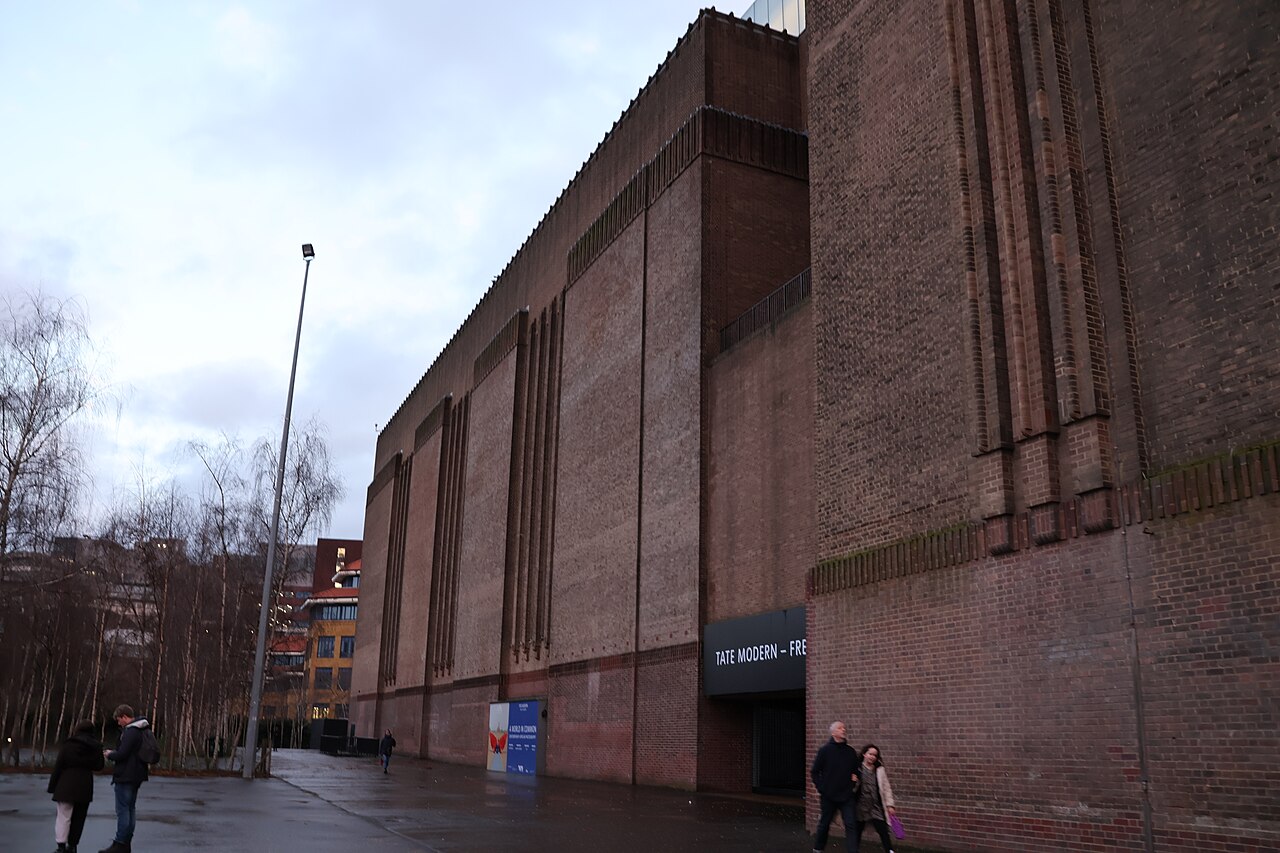
As with the UK's other national galleries and museums, there is no admission charge for access to the collection displays, which take up the majority of the gallery space, whereas tickets must be purchased for the major temporary exhibitions.
- visitors_2025
- 4,514,266 (2023 figure; 2025 data not yet available)
Lore & Background
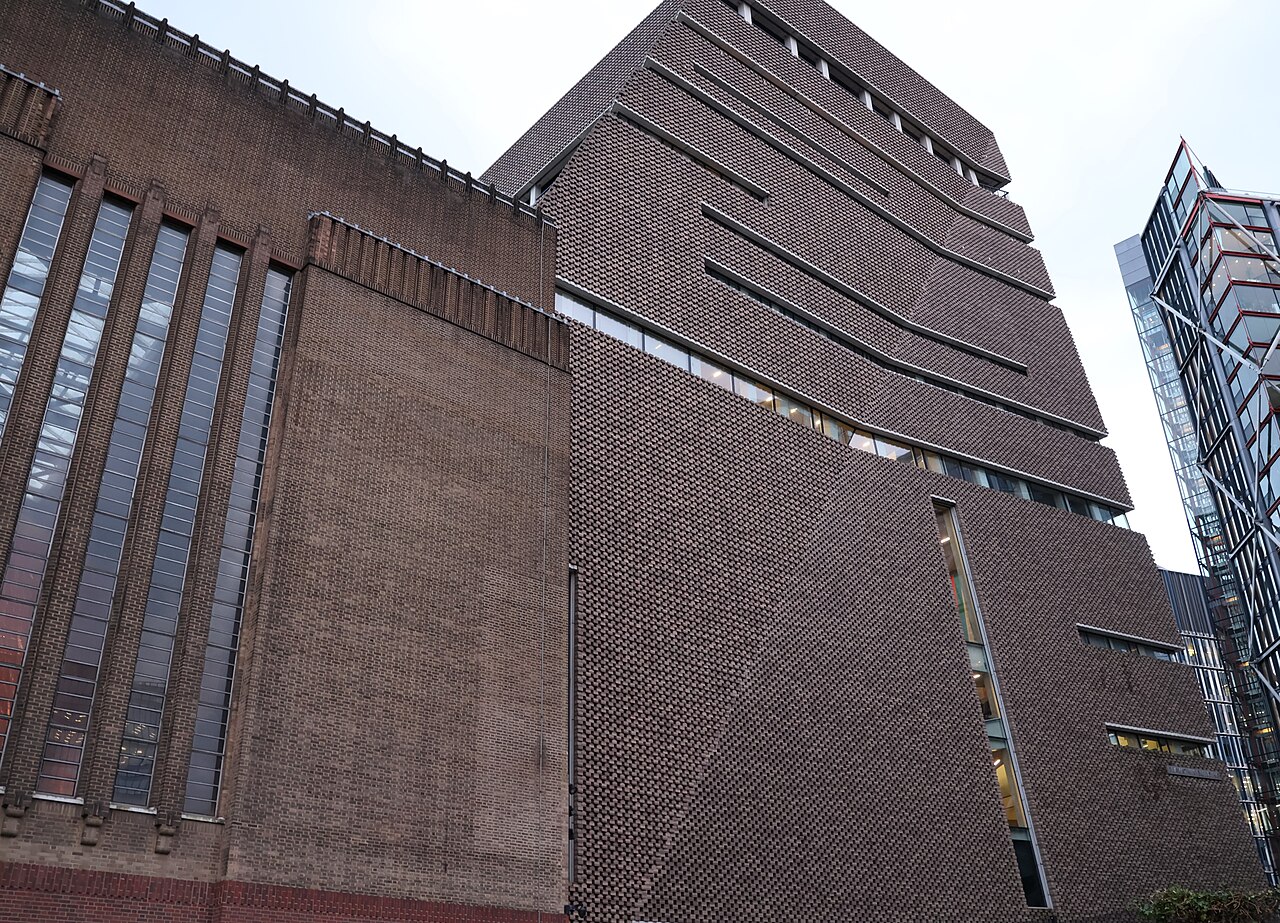
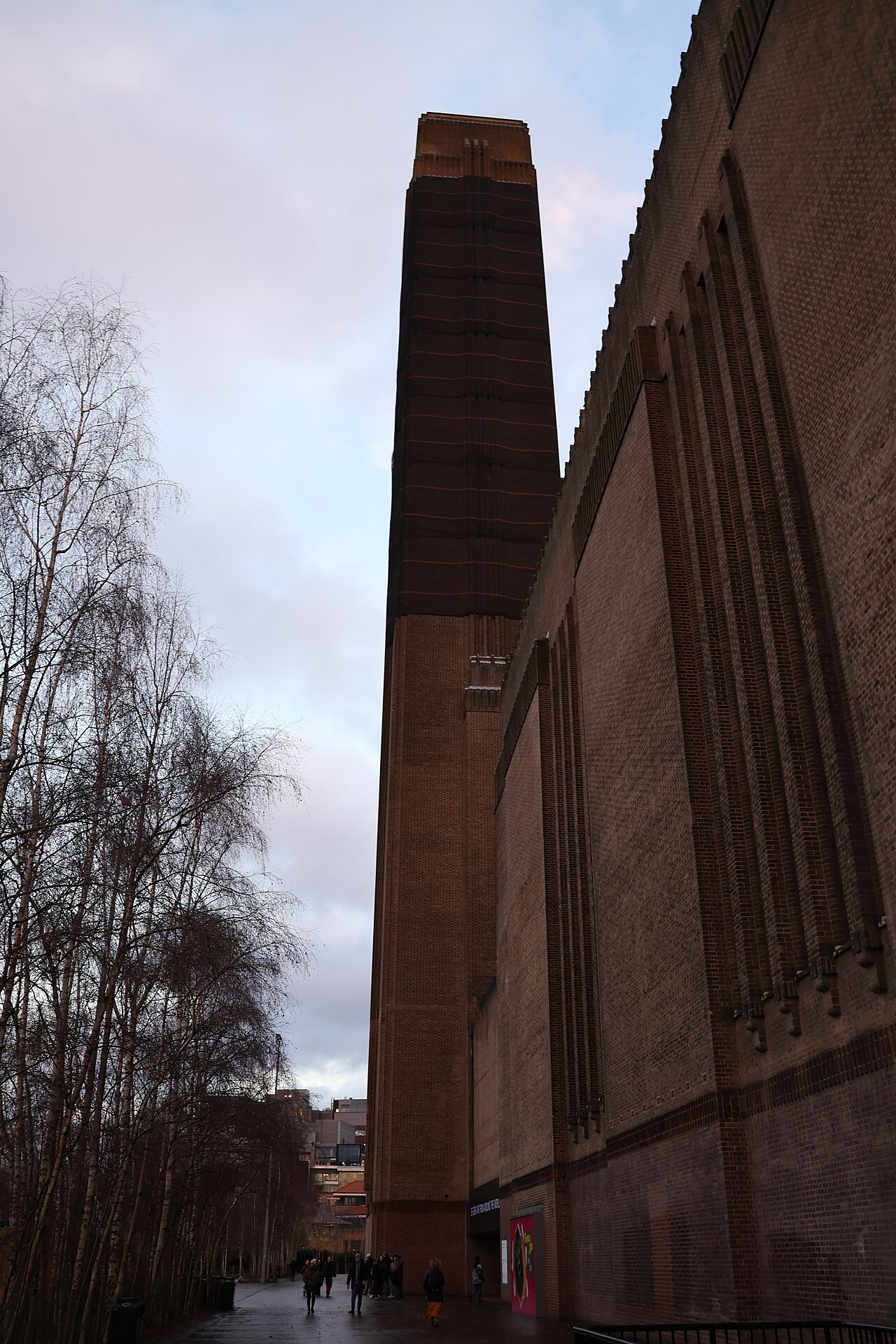
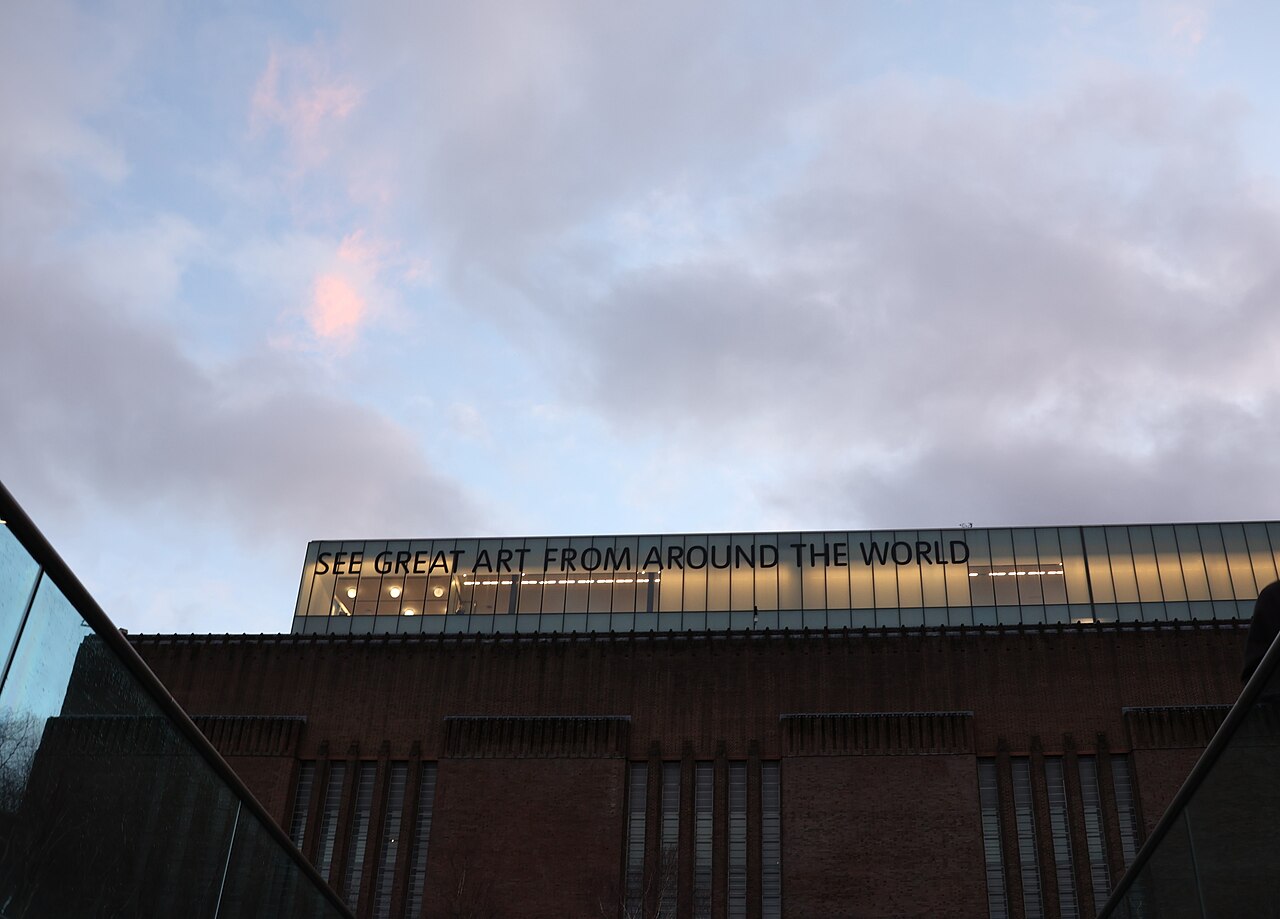
In July of the same year, an international competition was launched to select an architect for the new gallery. The most obvious external change was the two-story glass extension on one half of the roof. Much of the original internal structure remained, including the cavernous main turbine hall, which retained the overhead travelling crane. It received 5.25 million visitors in its first year. The previous year the three existing Tate galleries had received 2.5 million visitors combined. The first phase of the expansion involved...
Reader's Guide
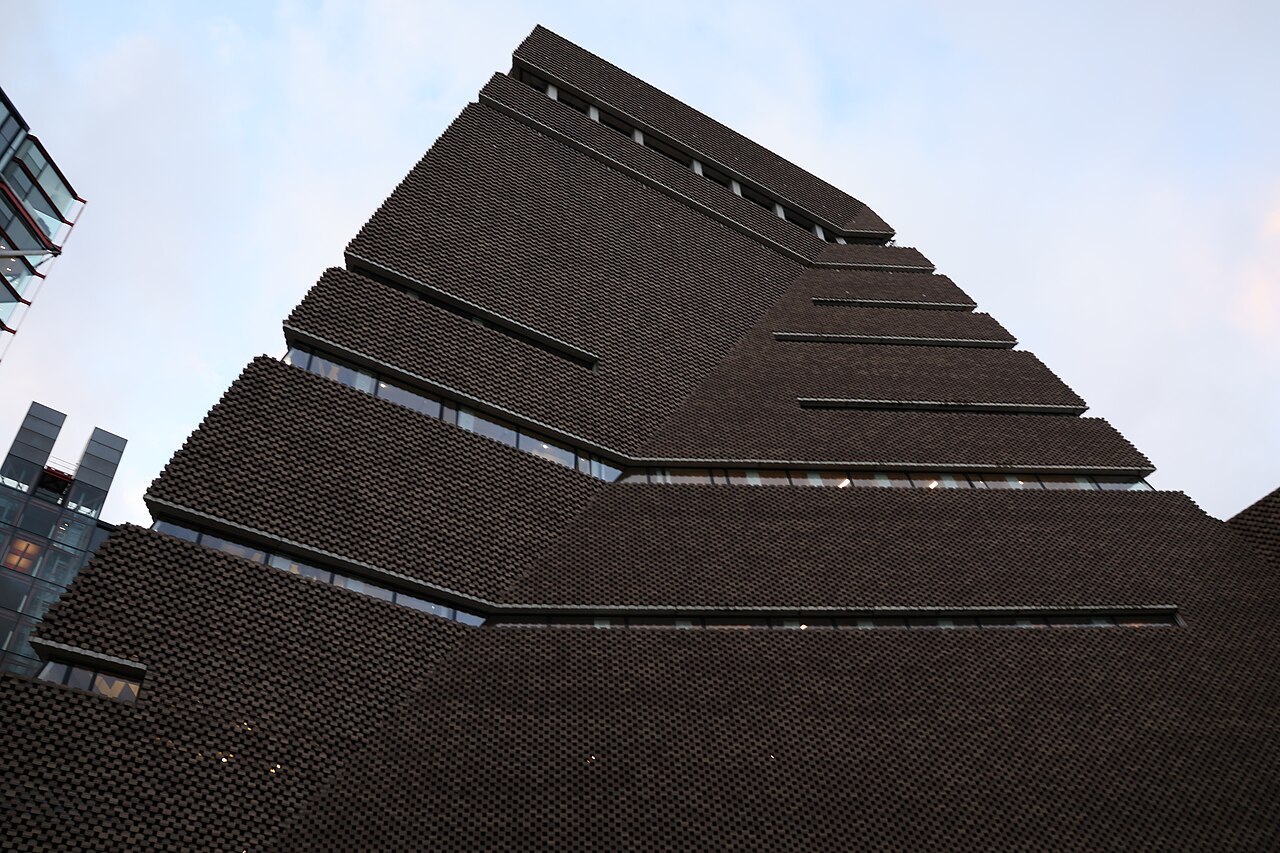
Tate Modern's significance lies in its transformation of a disused industrial power station into a world-leading museum of modern and contemporary art, setting a precedent for adaptive reuse of heritage buildings. The museum's collection spans international modern and contemporary works, with themed displays that change periodically. Its legacy includes the preservation of a landmark building that was at risk of demolition, and its role as a catalyst for the regeneration of the Bankside area.
Did You Know?
- The term 'International Style' was first used in 1932 by historian Henry-Russell Hitchcock and architect Philip Johnson to describe a movement among European architects in the 1920s.
- The International Style is defined by three key design principles: architecture as volume (thin planes create form), regularity in the facade, and no applied ornament.
- The style is sometimes called rationalist architecture, though that term in English mostly refers to Italian rationalism or the style that developed in 1920s Europe more broadly.
- One of the world's earliest modern buildings showing International Style features is the Fagus Works shoe factory, designed by Walter Gropius in 1911 in Alfeld, Germany.
- The 1927 Weissenhof Estate in Stuttgart, overseen by Mies van der Rohe, was one of the first and most defining manifestations of the International Style and was enormously popular with thousands of daily visitors.
Origins and the 1932 Codification
The International Style as a named movement owes its existence to a 1932 exhibition at the Museum of Modern Art in New York, where art historian Henry-Russell Hitchcock and architect Philip Johnson set out to define a coherent European design current that had been emerging since the 1920s. Their exhibition catalog distilled the movement into three governing principles: buildings should be conceived as volumes shaped by thin planes rather than solid masses; facades should exhibit regularity rather than traditional symmetry; and all applied ornament was to be eliminated. This codification gave a label to work that had already been produced by a small circle of modernist architects, including Ludwig Mies van der Rohe, Jacobus Oud, Le Corbusier, Richard Neutra, and Johnson himself. The style was deeply rooted in the broader modernism movement and reflected intersecting shifts in culture, politics, and technology during the early twentieth century. Earlier figures such as Victor Horta, Antoni Gaudí, Otto Wagner, and Charles Rennie Mackintosh had explored similar tensions between tradition and innovation, yet they were regarded as individualistic practitioners and the final voices of Romanticism rather than as part of this new, systematic approach.
Design Philosophy and Material Language
At its core, the International Style demanded a radical simplification of architectural form and a complete rejection of decorative excess. Buildings were to be composed of lightweight skeletal frames, modular rectilinear volumes, and flat, unadorned surfaces that alternated with expanses of glass. The preferred materials—steel, concrete, and glass—were celebrated not for their historical associations but for their capacity to express structure honestly and to serve industrialized, mass-production techniques. The design philosophy was underpinned by a machine aesthetic: logical decisions driven by function, transparency between interior and exterior, and an open, airy plan that dissolved the boundary between inside and outside. These ideals were commonly encapsulated in three slogans—ornament is a crime, truth to materials, form follows function—and in Le Corbusier's famous declaration that a house is a machine to live in. Accents in the design were permitted only when derived from natural irregularities such as the placement of doors, stair towers, fire escapes, ventilators, or even electric signage. The Getty Research Institute further characterized the style as one emphasizing volume over mass, repetitive modular forms, and the elimination of all ornament and color. Similar formal principles appeared in graphic design through movements like the International Typographic Style and Swiss Style.
Global Dominance and the Postwar Boom
Although the International Style originated in western Europe during the 1920s, its worldwide reach was cemented in the decades following World War II. European architects carried the vocabulary to the United States in the 1930s, and after the war it quickly became the de facto North American idiom for new construction. The 1950s and 1960s marked the style's zenith: it was adopted across the globe both for its practical efficiency and as a visual emblem of industrial progress and modernity. Urban reconstruction and development projects in the Western world overwhelmingly followed its principles well into the 1970s, making it the prevailing design philosophy of an entire era. The International Style was among the first architectural movements to achieve both critical acclaim and mass popularity, and it is often described as the high point of modernist architecture. Its influence on the built environment was so sweeping that commentators have credited it with single-handedly reshaping the skylines of every major city on earth through its simple cubic geometries. In this way, the style transcended individual buildings to become a global visual language of the twentieth century's most transformative decades.
Critique, Ambiguity, and Lasting Debate
The very uniformity that made the International Style so widely adopted also provoked some of the sharpest criticism in architectural history. Observers accused it of producing monotonous, austere environments that clashed with the landscapes and historic contexts in which they were inserted. This backlash fueled subsequent movements—postmodernism, new classical architecture, and deconstructivism—each of which positioned itself in opposition to the style's perceived rigidity. Beyond the aesthetic debate, the term itself remains contested. Scholars note that the International Style was never a single, unified phenomenon; its formal features manifested differently from country to country, and the apparent coherence of the movement is somewhat deceptive. The label applies equally to landmark works such as Le Corbusier's Villa Savoye and Frank Lloyd Wright's Fallingwater and to the mass-produced housing and commercial buildings of the era, raising questions about whether one is discussing iconic objects or a standardized architectural product. In continental Europe, related but distinct movements carried names like Functionalism, Neue Sachlichkeit, De Stijl, and Rationalism, while in English the term rationalist architecture often refers specifically to Italian rationalism. This web of overlapping labels underscores the difficulty of pinning down a single, clean definition.
Gallery
Frequently Asked Questions
What is Tate Modern?
Tate Modern is a major art gallery in London that serves as the home for the UK's national collection of modern and contemporary art from 1900 onward. It operates as part of the wider Tate network alongside Tate Britain, Tate Liverpool, and Tate St Ives.
Where is Tate Modern located?
The gallery sits in the Bankside area of Southwark, housed inside the converted shell of the old Bankside Power Station on the south bank of the Thames.
Is Tate Modern free to enter?
Yes—like other UK national galleries, there is no admission fee for the permanent collection displays, which occupy most of the building's floor space.
What kind of art can you see at Tate Modern?
The collection focuses on international modern and contemporary works created from 1900 to the present, making it one of the largest dedicated spaces for that era of art worldwide.
How many visitors does Tate Modern get in a year?
The most recent full-year figure available is roughly 4.5 million visitors (2023 data), with 2025 statistics not yet published.
More in Architectural Landmarks 1-24
Elsewhere in the Architectural Landmarks universe
Spotted an error? Know more?
This is a living reference — every entry is fact-audited, and reader corrections feed straight into our audit queue. Suggest an edit · See this site's audit record